ART EMOTION FLOW
Katsushika Hokusai: Becoming a Wave of Creative Inspiration — The Energy of Contextual Value
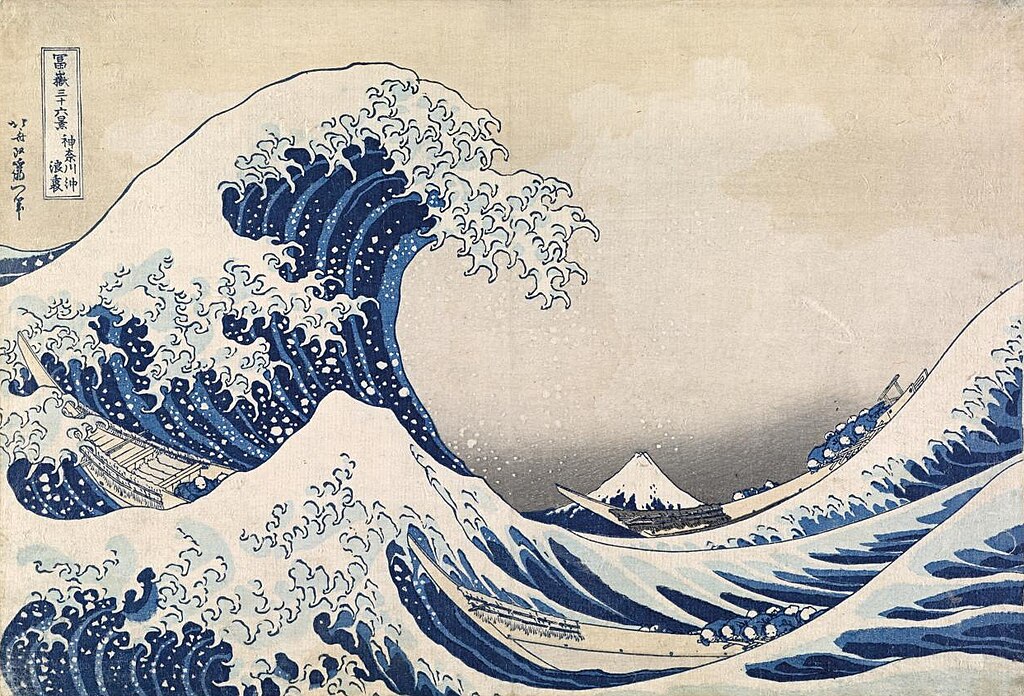
1. Low Initial Value: Functional Packaging
In the Edo period, Ukiyo-e was mass-produced, considered closer to newspapers than fine art.
- The Fact: Prints were used as cushioning material for exporting ceramics to Europe.
- Initial Perception: They were seen as disposable information, lacking aura or prestige.
2. Discovery of Contextual Value: The Cultural Encounter
A massive shift occurred when these prints reached European artists like Monet, Van Gogh, and Matisse.
- Structural Shock: Western artists were captivated by bold flatness and dynamic lines that ignored Renaissance perspective.
- Creative Misreading: What was common in Japan was interpreted in Europe as a revolutionary visual grammar.
3. Propagation and Redefinition: The Formation of Aura
As Hokusai’s structure influenced Van Gogh, Monet, and Debussy, it was elevated to the “origin of modern art.”
4. Commonality: Hokusai vs. Matisse
Both artists stimulate the brain through structural innovation rather than mere representation. Their works show how information and context shape emotional resonance.
| Category | Katsushika Hokusai | Henri Matisse |
|---|---|---|
| Initial Evaluation | Everyday Packaging | Immature “Beast-like” Painting |
| Innovative Element | Dynamic Flat Structure | Liberation of Color |
| Contextual Reversal | Altered Western Visual Systems | Reconstructed Visual Grammar |
| Emotional Impact | Natural Energy / Symbolism | Internal Peace / Liberation |
5. The Aura in the Age of AI
In today’s AI-driven era, the concept of aura extends beyond physical artworks. Information itself—metadata, historical context, cultural narratives—acts as an emotional trigger. Just as Hokusai’s print gained aura when contextualized in Europe, digital art and AI-generated works acquire emotional depth when framed by stories, histories, or symbolic associations. The aura is no longer only in the pigment or paper; it resides in the contextual information that shapes perception.
Relaxation and emotional recovery through art are not only visual but informational. When the brain receives context, it processes it as emotional data, altering mood and resonance. Thus, in the AI age, aura is the invisible field where information and emotion converge.