ART EMOTION FLOW
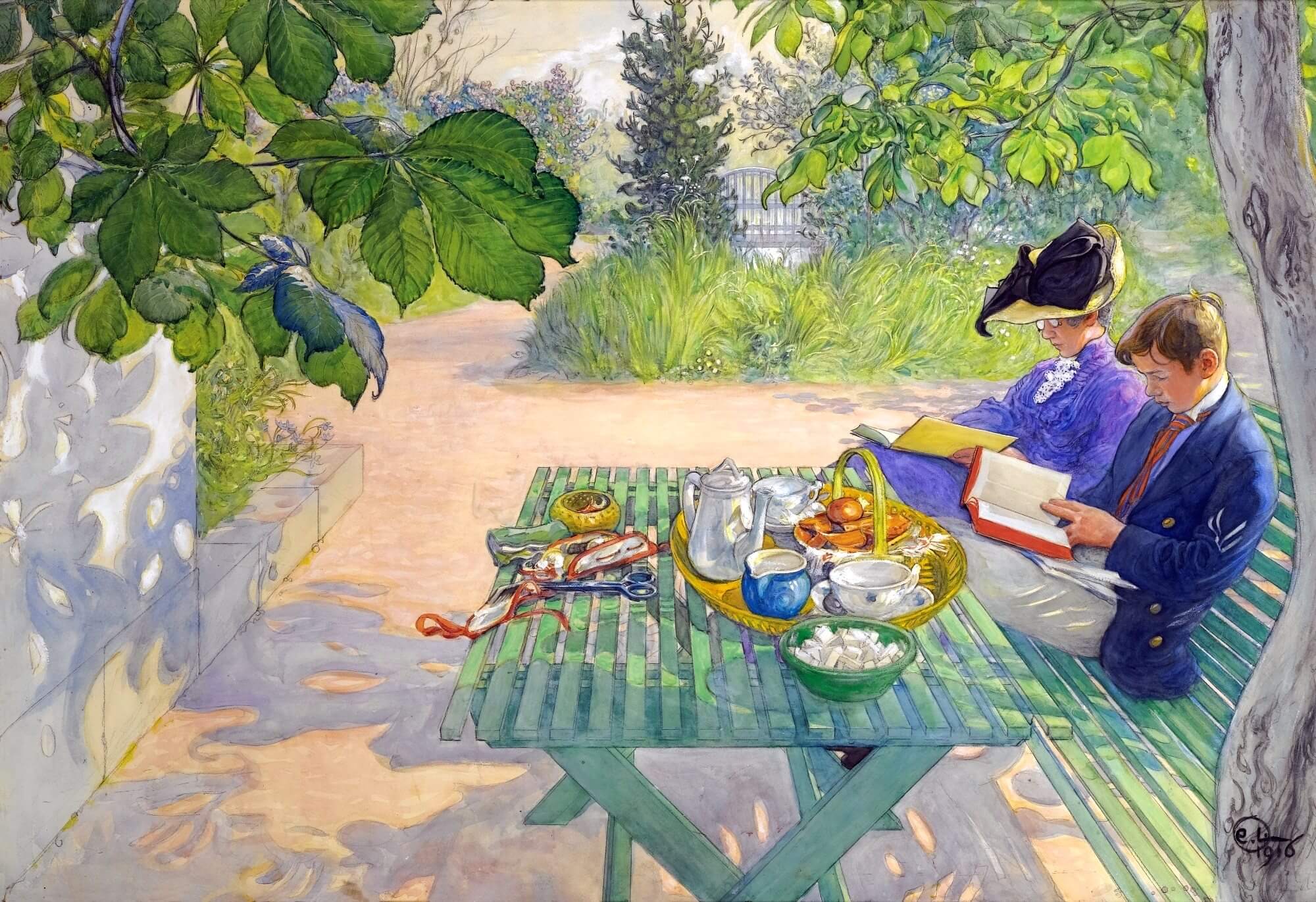
Carl Larsson’s <Holiday Reading (1916)> is a masterpiece that encapsulates the "archetype of Swedish happiness"
Carl Larsson:
The Architecture of Domestic Happiness
Art Emotion Flow Case Study #06: Modern Vibrancy & Restorative Order
1. Visual Resonance: The Efficiency of Illustrative Clarity
Carl Larsson’s 1916 work, "Holiday Reading," is more than a domestic scene; it is a visual architecture of calm. His clean outlines and luminous spaces stand in contrast to the heavy shadows of traditional oil painting, offering a modern clarity that anticipates contemporary design principles.
This “Illustrative Order” reduces cognitive load, allowing the viewer’s brain to bypass uncertainty and move directly into a state of predictability. The result is emotional safety and systemic calm. Larsson’s lines are not decorative but functional, serving as cognitive filters that eliminate chaos and reinforce trust in the environment.
2. Sensory Transfer Flow: Chromatic Warmth as a Physical Anchor
Larsson’s palette—bright whites, Swedish reds, and soft yellows—creates a Thermal Resonance that translates into physical comfort. His colors are not merely aesthetic but therapeutic, functioning as sensory anchors that stabilize the body’s rhythms.
- Auditory Association: The silence of the absorbed reader evokes a soothing "Visual White Noise", akin to the crisp rhythm of turning pages.
- Thermal Feedback: The shadowless rendering eliminates hidden threats, allowing the parasympathetic nervous system to lower heart rate and induce relaxation.
In this way, Larsson anticipates modern color therapy, showing how chromatic warmth can act as a physiological anchor. His art becomes a multisensory environment where vision, sound, and bodily comfort converge.
3. Emotional Balancing: Domestic Synchrony
Mechanism: Predictable Order (Lines) + Thermal Safety (Colors)
→ Physiological Relaxation → Emotional Flow (Happiness)
According to the James-Lange Theory, emotions arise from bodily reactions. Larsson’s scene of safe immersion—reading in a sunlit room—invites the viewer’s nervous system to synchronize with the painting’s rhythm. The result is meditative homeostasis, a balance between body and mind that manifests as happiness.
Domestic life here is not trivial but sacred. Larsson transforms everyday routines into emotional architecture, proving that happiness can be designed through order, rhythm, and warmth.
4. Cultural Context: Swedish Domestic Ideals
Larsson’s vision reflects Sweden’s cultural emphasis on home as sanctuary. At the turn of the 20th century, industrialization threatened traditional rhythms of life. His art reasserted the home as a restorative center, embedding national identity in domestic harmony. This ethos later influenced Scandinavian design, where simplicity, light, and warmth remain central values.
5. Modern Relevance: Visual Therapy in Contemporary Design
Today, Larsson’s principles resonate in architecture, interior design, and wellness practices. Bright colors, orderly spaces, and predictable rhythms are used to reduce anxiety and foster well-being. His art demonstrates that visual harmony is not only aesthetic but deeply therapeutic, offering lessons for modern environments seeking balance in an age of overstimulation.